
Among Sensex firms, Bajaj Finserv, Bajaj Finance, Tata Steel, Reliance Industries, Sun Pharma, Tata Motors Passenger Vehicles, Axis Bank and Infosys were among the major gainers. Bharti Airtel and Asian Paints emerged as the laggards from the pack.

A day after it received Rs 32,403 crore GST demand, Infosys on Thursday said Karnataka state authorities have withdrawn the 'pre-show cause' notice to the company and directed it to submit further response to the Directorate General of GST Intelligence (DGGI) on the issue. India's second largest IT company had made headlines on Wednesday after GST authorities slapped a Rs 32,403 crore notice on it for services availed by the company from its overseas branches for five years starting 2017.

From the Sensex firms, Bajaj Finance, Infosys, Hindustan Unilever, ICICI Bank, HCL Tech, UltraTech Cement, Bajaj Finserv, State Bank of India, Tata Consultancy Services, Reliance Industries, Axis Bank and Larsen & Toubro were among the major gainers. However, Trent, Tata Steel, Tech Mahindra and Maruti were among the laggards.

Sikka has been appointed as the Executive Vice-Chairman, Infosys said.

From the Sensex firms, Infosys declined by 3.54 per cent. Power Grid, Eternal, HCL Tech, Tata Consultancy Services, Bharti Airtel, IndusInd Bank, NTPC and HDFC Bank were the major laggards. Sun Pharma, Adani Ports, Bajaj Finance, State Bank of India and Tech Mahindra were the gainers.

Infosys COO U B Pravin Rao has been named as the interim-MD and CEO of the firm.
From the Sensex firms, Adani Ports, Eternal, Bajaj Finance, Axis Bank, Bajaj Finserv, Reliance Industries, Power Grid and NTPC were the major gainers. Sun Pharma, however, tanked over 5 per cent.
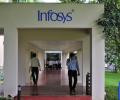
Infosys, in April, had said that it will pay up to Rs 13,000 crore to shareholders during the current financial year through dividend and/or share buyback.

The audited consolidated financial results of the company and its subsidiaries as per Indian GAAP would also be\nconsidered at the board meeting.

There were no evidence of any kickbacks, inappropriate contracting or unreasonable expenses

Ranganath has held several leadership positions.
Restricted stock units can be an effective tool to curb employee attrition and retain key talent

Even as Srini Pallia, a Wipro veteran, is set to take charge as the chief executive officer (CEO) of the company, analysts expect the stock's underperformance to continue in the near-future. This, they believe, will be on the back of likely loss of market share, and difficult business environment. "We expect Wipro to underperform peers on growth once again in FY25 as channel checks and media reports suggest Wipro is losing share with select clients across multiple verticals.

Country's second largest IT firm Infosys has crossed the $2 billion revenue mark in Europe for the first time, driven by strong demand for consulting and system integration (CSI) services.

Has Vijay Shekhar Sharma given up on the bank? For now, he seems to be on a save-OCL mission. The bank will face its logical end, observes Tamal Bandopadhyay.
This is the first time that the company has acquired land on its own without seeking the assistance of the state government's land acquisition agency, Karnataka Industrial Area Development Board.
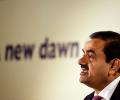
The Supreme Court on Thursday asked the Sebi to probe within two months allegations of stock price manipulation by the Adani group and any lapses in regulatory disclosures, and also set up a panel to look into protection of Indian investors after a damning report by a US short seller wiped out more than USD 140 billion of the conglomerate's market value. The top court while directing the setting up of a six-member committee headed by former apex court judge Justice A M Sapre for the assessment of the extant regulatory framework and for making recommendations to strengthen the process said it was appropriate to set up such a panel of experts in order to "protect Indian investors against volatility of the kind which has been witnessed in the recent past". The court-appointed Justice Sapre panel, which will be provided assistance by the Centre and other statutory agencies including the Sebi chairperson, will have to submit its report in a sealed cover within two months, said the bench which comprised Chief Justice D Y Chandrachud and Justices P S Narasimha and J B Pardiwala.

Equity indices ended higher for the second straight session on Tuesday, with the Nifty rallying over 1 per cent, helped by across-the-board buying and recovery in the US and Asian markets. Foreign fund inflows also added to the momentum. The 30-share BSE Sensex climbed 578.51 points or 0.98 per cent to settle at 59,719.74.
The sustainable impact of this process is under scrutiny, Tripathi added.

'Considering Pai is putting his own personal money in Byju's, stakeholders in the company can look forward to more governance and transparency.'
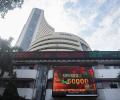
The top 10 valued firms added a total Rs 1,56,317.17 crore to their market valuation last week, helped by across the board rally which catapulted the benchmark index Sensex to the record 60,000 mark for the first time. During the last week, the 30-share BSE benchmark rallied 1,032.58 points or 1.74 per cent. The BSE Sensex made history on Friday by reaching the 60,000-mark for the first time ever. The market capitalisation (mcap) of Reliance Industries zoomed Rs 58,671.55 crore to reach Rs 15,74,052.03 crore. The m-cap of RIL went past Rs 16 lakh crore mark in intra-day trade on Thursday following a rally in its share price.

The clarifications came directly from the board of directors.

Top Indian IT firms, such as TCS, Infosys, and Wipro, have signalled taking aggressive cost take-out measures, including reduction in sub-contracting costs, travel expenses, freeze in salary hikes, and holding back variable payments, among others.

PowerGrid was the top loser in the Sensex pack, slumping over 4 per cent, followed by ONGC, IndusInd Bank, Kotak Bank, L&T, Asian Paints and Bajaj Auto. NSE Nifty tanked 258.40 points to 14,359.45.

The latest whistle-blower revelations of multiple shenanigans at global ride-hailing app Uber, coming thick and fast after serial exposes of various dodgy practices at Facebook, Apple, Amazon, Netflix, Google in the recent past raises uncomfortable questions about India Inc. If the FAANGs, Twitter and Uber can be guilty of multiple and diverse transgressions what's happening in Indian corporations? It can be nobody's case that India's largely family-owned and - managed private sector is a beacon of transparency or best corporate governance practices, bolstered as it is by an informal omerta among employees, managements and even boards.

Companies spent less money buying back their shares from the public last year than at any time since 2015. They announced buybacks of up to Rs 14,341 crore, show numbers from primary market tracker Prime Database. The total amount spent was Rs 13,597 crore. Both the amounts are lower than what was offered (Rs 39,564 crore) and spent (Rs 36,517 crore) in 2020.

It has also proposed that CEO and managing director Salil Parekh be granted annual performance-based stock incentives in the form of restricted stock units worth Rs 10 crore under the 2019 Plan.

Business executives are finally dusting off their long-unused suitcases to resume travel, thanks to a good vaccination rate, a drop in fresh cases, and an easing of travel restrictions. It comes as a huge relief for the ravaged aviation, travel and hospitality sectors. "We are witnessing a 40 per cent recovery on pre-covid volumes from our business travellers, signalling the return of corporate confidence in air travel," said Indiver Rastogi, president & group head, Global Business Travel, Thomas Cook (India) & SOTC.

When Open Network for Digital Commerce (ONDC) was conceived last December, the idea was to reduce the dominance of e-commerce giants like Amazon and Flipkart. It was also to bring in a level-playing field for small merchants in India's fragmented but fast-growing $1-trillion retail market. However, those goals have changed now as large e-commerce players such as Flipkart, Amazon and Ecom Express are in various levels of talks with the ONDC team. They want to form partnerships like integrating with the network as well as providing their expertise to build it, according to the industry sources.
Stock market crash: TCS sheds $21 billion in market capitalisation, Infosys $7 billion and Wipro around $3 billion

The 30-share Sensex ended up 214 points at 27,890 and the 50-share Nifty closed up 52 points at 8,430.

Equity investors grew richer by Rs 32.49 lakh crore in 2020 on the back of smart returns in the stock market which had a roller-coaster ride during the year hit by the coronavirus pandemic. The COVID-19 outbreak ravaged lives and livelihoods on a global scale, shuttering businesses and jolting world equities. But amid all the gloom, Indian stock indices gave hope of returning to winning ways towards the latter part of the year.
He was accompanied by Hindustan Lever Limited chairman Vindi Banga, ICICI CEO K V Kamath and a member of the Board of Governors.
Nandan Nilekani, erstwhile CEO and a founder of Infosys Technologies Limited, who is currently co-chairman of its board of directors, offered a peek into his forthcoming book Imagining India, which he said attempts to alleviate a gap in understanding India, while delivering the kick-off Global Leader Lecture at Johns Hopkins University's School of Advanced International Studies.

Even though India has major strengths in chip design and in making the software that actually commands the processors to execute specific tasks, chip-manufacturing has never been the country's strength.

The rupee had rebounded 15 paise to close at two-week high of 61.77 against the dollar at the Interbank Foreign Exchange on Friday.

India conceding ground to bring only top 100 digital companies like Google, Facebook, and Netflix into the global taxation pact may have revenue implications. This will mean that New Delhi will have to withdraw the contentious 2 per cent equalisation levy on e-commerce operators by 2023. This may have revenue implications for India, experts pointed out, as the equalisation levy has a much lower annual revenue threshold of Rs 2 crore (euro 0.2 million) as against euro 20 billion agreed by 130 countries at the Organization for Economic Cooperation and Development (OECD). India, along with other developing countries, was pitching for at least euro 1 billion threshold to cover at least 5,000 global entities. India collected Rs 2,057 crore from the equalisation levy in 2020-21, an 85 per cent growth over Rs 1,136 crore in the previous fiscal.

Elliott Capital's letter to Cognizant, detailing how the latter can reinvent itself, has many lessons for its India-listed peers like TCS and Infosys, says Akash Prakash.

Like their international peers, Indian CEOs too have a significant portion of their incomes coming from stock options and performance-linked bonuses
 © 2026 Rediff.com - Advertise with us - Disclaimer - Privacy Policy - Sitemap - Feedback - About us - Terms of use - Grievances